
Published on “European View”, Wilfried Martens Centre for European Studies
Abstract
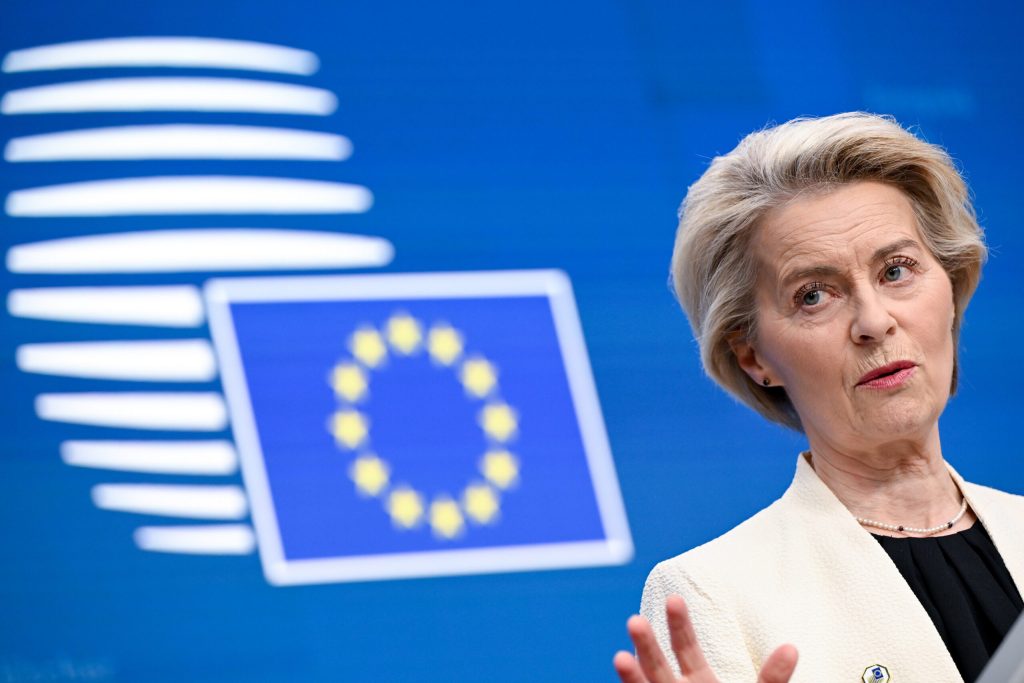
In March 2025, opening a European Parliament debate on defence, Commission President Ursula von der Leyen cited Alcide De Gasperi, recalling that 70 years earlier he had urged Europeans not merely to keep the peace but to build a common defence. The reference was not simply a rhetorical flourish: the collapse of the European Defence Community in 1954 still shapes Europe’s unfinished security architecture. This article traces the European Defence Community from the Pleven Plan (1950) to the rejection of this proposed treaty by the French National Assembly (1954), and reconstructs De Gasperi’s federalist reading of it, embodied in Article 38, which tied military integration to a democratic political community. The article then weighs that vision against what the EU has since built and what is still missing, concluding with three lessons learned from the analysis: this is Europe’s last call for a common defence, unpopular decisions demand courage, and the future lies not in ceding sovereignty but in maintaining it within an association of sovereign states.

Introduction
Europe is being forced to think about its own defence with an urgency unknown since the early days of the Cold War. It was in that earlier moment of danger that Alcide De Gasperi argued that Europeans needed not merely peace among themselves but a common defence—a conviction Commission President Ursula von der Leyen referred to when she quoted him to open a European Parliament debate on European security in March 2025, calling it the task of our generation as it had been of his (von der Leyen 2025).
The project De Gasperi advocated, the European Defence Community (EDC), collapsed in 1954, and its failure still marks the unfinished architecture of European defence. This article asks what that episode can teach today’s Europe. It traces the EDC from the Pleven Plan to the defeat of the proposed treaty, reconstructs De Gasperi’s federalist reading of the treaty, weighs that vision against today’s EU and concludes with three lessons for the present that we can draw from this history.
From the Pleven Plan to the Empty Chair of 1954
The EDC was a child of the early Cold War. The outbreak of the Korean War in June 1950 convinced Washington that Western Europe had to be rearmed, and that West German manpower was indispensable. For France, barely five years after the occupation, the prospect of a new German army was politically intolerable. The solution, devised in Jean Monnet’s circle and announced by Prime Minister René Pleven on 24 October 1950, was to dissolve the German contribution within a supranational structure: a European army, with German units but no German general staff and no German national army, placed under a common European political and military authority, a European defence minister, a council of ministers and an assembly. The logic of the Schuman Plan, then being negotiated for coal and steel, was thus extended to the most sensitive domain of all.
After two years of difficult talks, the EDC Treaty was signed in Paris on 27 May 1952 by the Six: France, the Federal Republic of Germany, Italy, Belgium, the Netherlands and Luxembourg. The signatories included De Gasperi, Robert Schuman and Konrad Adenauer. The treaty provided for an integrated European army, a commissariat of nine members, a council of ministers, a court of justice and a parliamentary assembly. Ratification proceeded in West Germany and the Benelux countries; Italy was ready and waiting to ratify; France, the very author of the plan, hesitated.
By 1954 the climate had changed. Stalin’s death in March 1953 and the Korean armistice that July softened the sense of imminent threat that had made German rearmament seem urgent. In France a heterogeneous front hardened against the treaty: Gaullists, for whom General de Gaulle condemned the EDC as ‘un essai d’abdication nationale’ (an attempt at national abdication, De Gaulle 1985, 188), and Communists opposed to binding France to the Western bloc, were joined by deputies anxious about both the absence of the UK and renouncing the national army. Pierre Mendès France, prime minister as of June 1954, sought at a conference in Brussels that August to strip the treaty of its supranational features; the other five signatories refused to reopen what they had ratified. Unwilling to make ratification a question of confidence in his government, Mendès France let the matter come to the floor unprotected. On 30 August 1954 the National Assembly, voting 319 to 264, adopted a procedural motion (the question préalable) declining even to debate the treaty. Without a vote on the merits, France had killed the European army it had itself proposed. West German rearmament went ahead instead through the Western European Union and NATO, and the federal moment passed.
A federalist, not functionalist, design: Article 38
The EDC is usually remembered as a defence project. For De Gasperi it was something larger: the lever for a political union. Here, two competing logics of integration met. The functionalist method, associated with Monnet and Schuman, proposed beginning with limited, technical sectors, creating concrete solidarities of fact, and letting integration ‘spill over’ into politics gradually and almost imperceptibly; the political finality was real but deferred. De Gasperi shared the destination but distrusted the postponement, above all in defence. An army is the most political of all instruments; to place it under a supranational command without a corresponding democratic political authority was, in his eyes, both dangerous and unfinished. His conviction was federalist in the proper sense: military integration had to be accompanied, from the outset, by the deliberate construction of a democratic, federal political authority able to control it and to legitimise it.
De Gasperi had sketched that architecture in concrete terms before the treaty was even signed. In a memorandum on German rearmament and the defence community sent to Antonio Segni in December 1951, he set out four principles. The defence community was to be ‘the nucleus of a European federation’, which the participating states would bind themselves to build, endowing the community with the mandate and the means to do so. Its institutions were to be recast accordingly: the bulk of powers would shift to the parliamentary assembly, which would also draft a European electoral and fiscal law; the commissariat, preferably a collegial executive based on the Swiss model, would become a genuine government, appointed and removable by that assembly and subject to its political, technical and financial control; the council of national ministers would be reduced to a Bundesrat-style upper chamber wielding mainly a power of veto in defined cases; and the common budget would become a true federal budget, voted on and amended by an assembly that would ‘draw its sovereign power directly from the peoples’ (De Gasperi 1951, 680).
This conviction was written into the treaty. At Italy’s insistence, and thanks to pressure from De Gasperi personally, Article 38 of the EDC Treaty charged the Community’s Assembly with studying the creation of a new, democratically elected chamber. This body was conceived as the seed of a future federal or confederal structure founded on the separation of powers and a bicameral system of representation. To move quickly, the task was entrusted to an enlarged version of the Common Assembly of the European Coal and Steel Community, the so-called Ad Hoc Assembly, chaired by Paul-Henri Spaak. This is the true link between Article 38 and the European Coal and Steel Community: the Coal and Steel Assembly was the instrument, but the provision itself belonged to the defence treaty. In March 1953 that Assembly produced a draft Treaty for a European Political Community, an embryonic federal constitution with a directly elected people’s chamber, a senate and a European executive council.
Historians still debate De Gasperi’s motives. Some have read Article 38 as a tactical device, a way to anchor Italy to the construction and to reassure domestic opinion; others, following Daniela Preda, see in it the mature expression of a lifelong federalism (Preda 1989; Craveri 2006). The design itself, however, was unambiguous: defence was to be the occasion for political union, with democratic legitimacy built in rather than bolted on afterwards. For De Gasperi, Europe was to be a political and moral community and not merely a market or an army, a conviction rooted in his formation as a man of the borderlands who had watched nationalism twice ruin the continent. He gave that conviction its most vivid form when he described the army the Community was meant to create:
If we call upon the armed forces of the various countries to merge together in a permanent and constitutional body, and if they are to serve in the defence of a wider homeland, then that homeland must be visible, solid and alive, even if the whole edifice is not yet perfect. Its main walls must already be in sight, and a common political will must keep constant watch, so as to gather up the purest ideals of the associated nations and make them shine in the light of a common hearth (De Gasperi 2004, 120).
When the EDC fell in 1954, the European Political Community fell with it. Integration reverted to the functionalist path that would lead to the Treaties of Rome in 1957, defence was left to NATO and the federalist road was not taken. De Gasperi, who died that same August, did not live to see either the defeat or its long-term consequences.
The relevance of De Gasperi’s vision: what remains, and what is still missing
Measured by institutions, Europe has travelled a great distance. The Union now possesses an apparatus for security and foreign affairs that it lacked entirely in the 1950s. The Lisbon Treaty created a high representative for foreign affairs and security policy, a double-hatted vice-president of the Commission (currently Kaja Kallas), served by the European External Action Service. The Common Security and Defence Policy, the European Defence Agency (founded in 2004), Permanent Structured Cooperation (in 2017), the European Defence Fund (which has seen over €4 billion committed to it since 2021) and the 2022 Strategic Compass have steadily built shared planning and capability development. The year 2025 brought a qualitative leap: the first-ever commissioner for defence and space (Andrius Kubilius); the ReArm Europe Plan/Readiness 2030, presented on 4 March, aiming to mobilise up to €800 billion; the White Paper for European Defence of 19 March; the Security Action for Europe (SAFE) instrument, offering €150 billion in joint loans; and the activation of the national escape clause of the Stability and Growth Pact, allowing up to 1.5% of GDP in additional defence spending, with 12 member states requesting it in the first months (European Commission 2025). It is telling that the Commission president opened this turn of events by quoting De Gasperi: it was an admission that the unfinished business of 1954 is back on the agenda.
And yet, the heart of his design remains unbuilt. There is still no European army, no integrated command, no genuine common defence—only the coordination of national forces. Above all, there is no adequate common foreign policy. The Common Foreign and Security Policy still runs on unanimity, so that a single dissenting capital can paralyse the whole, and Europe too often speaks with 27 voices on precisely the questions that decide its fate, from Ukraine to the Middle East to relations with Washington and Beijing. The instruments of 2025 are overwhelmingly financial and intergovernmental: they encourage national spending, but they stop short of the political and constitutional leap. A common defence without a common foreign policy would be a body without a head: armed forces presuppose a political will to direct them, and that will is precisely what 27 competing national diplomacies cannot reliably supply. The new mechanisms fund hardware and industry; they do not yet create the single political authority that would decide when, where and why that hardware is used. Joint defence bonds have been set aside, procurement remains fragmented along national lines and the most heavily indebted states struggle to use debt-based tools at all. Europe, in short, has acquired the means without acquiring the political sovereignty to wield them. De Gasperi’s central insight, that capabilities without a democratic political authority are incomplete, describes today’s gap with uncomfortable precision. The institutions exist; the federal political will does not yet.
Lessons for Today’s Europe
This is the last call
Von der Leyen has described Donald Trump’s return as Europe’s third wake-up call after the pandemic and the invasion of Ukraine, and has warned that it may be the last (Alli 2025). The current strategic environment leaves little room for the leisurely gradualism of the past: we face a revisionist Russia, an inward-looking and transactional US, and the prospect of a settlement in Ukraine negotiated over Europe’s head. In 1954 the continent could afford to fail because the American guarantee filled the vacuum; today that safety net is fraying. The window to build a credible common defence is narrow, and it is closing. De Gasperi regarded the EDC as an opportunity that, once it passed, would be lost if it was not seized; seventy years on, this judgement reads less as history than as a warning.
The courage to take unpopular decisions
The EDC did not fail because the idea was wrong, but because its leaders lacked the courage to defend it. Mendès France declined to stake his government on ratification, and the Assembly hid behind a procedural motion rather than vote on the substance. The lesson is that European defence demands leaders who are willing to take politically costly decisions, on spending, on the pooling of capabilities and on relinquishing the comfort of the national veto, even if this means going against a public opinion shaped by pacifist sentiment and by hostile information operations. Von der Leyen herself conceded that more courage would be necessary and that difficult choices lay ahead (von der Leyen 2025). In a crisis, Europe is built by courage rather than by consensus.
Not ceding sovereignty, but belonging to an association of sovereignties
The sharpest weapon of populists and sovereigntists is the claim that integration strips nations of their sovereignty. De Gasperi’s answer, decades ahead of its time, was that this claim rests on a false premise. As Ballini records, he held that it was precisely on the foundation of an association of national sovereignties, secured by democratic constitutional institutions, that national forces could expand—not merely by setting up common administrations, but through a superior political will in which the several national wills would meet and merge their individual interests in a higher synthesis, an objective he regarded as not to be renounced (Ballini 2023, 45). Sovereignty in the modern world is not a fixed quantity that one either retains intact or surrenders; for a medium-sized European state acting alone, formal sovereignty is increasingly hollow, being insufficient to enable that state to secure its borders, defend its currency or shape global rules. Pooled or associated sovereignty does not subtract from national power. By acting together, states recover an effective sovereignty that none of them commands alone: a common European defence would give each member more security and more influence than its national army can offer, not less. No European state today can deter a nuclear-armed great power single-handedly, sustain a defence–industrial base at continental scale or finance credible deterrence on its own; together they can. The real choice is not between national sovereignty and its loss, but between an empty sovereignty exercised in isolation and a real, shared sovereignty exercised in common. De Gasperi had refused the nationalist label long before today’s quarrels, and without ever disowning the nation:
When we say that we are not nationalists, we mean it in this sense: that we do not want every problem solved through the force of the nation, through national initiative. We are not saying anything that limits our real strength, that diminishes, compresses or depresses our Italian national feeling. The basis of all cooperation is the nation within a consortium of free nations. (De Gasperi 1985, 793)
This is De Gasperi’s most enduring lesson, and the most precise rebuttal of the sovereigntist objection.
Conclusion
The failure of the EDC in 1954 was not merely a missed treaty but a missed model: the federalist binding of defence to a democratic political union. Seventy years later, Europe has assembled an impressive toolkit yet still lacks the political sovereignty to make it count, which is exactly the gap De Gasperi foresaw. The present crisis offers, perhaps for the last time, the chance to complete the unfinished design. Whether Europe seizes it depends on the one variable that has not changed since 1954: political courage. As von der Leyen reminded the Parliament by quoting him, the task of De Gasperi’s generation has become the task of our own.
References
Alli, P. (2025). The role of Italy in shaping the transatlantic relationship under Trump. European View, 24(1).
Ballini, P. L. (2023). De Gasperi, la CED, l’Europa. In P. L. Ballini (a cura di), Quaderni degasperiani per la storia dell’Italia contemporanea (vol. 8, p. 45). Soveria Mannelli: Rubbettino.
Craveri, P. (2006). De Gasperi. Bologna: Il Mulino.
CVCE (s.d.). Article 38 of the Treaty establishing the European Defence Community. Lussemburgo: Centre Virtuel de la Connaissance sur l’Europe.
De Gasperi, A. (1951). Partecipazione della Germania alla difesa dell’Occidente: comunità europea della difesa (memorandum ad Antonio Segni, dicembre 1951). In P. L. Ballini & E. Bernardi (a cura di), Il governo di centro: libertà e riforme. Alcide De Gasperi – Antonio Segni. Carteggio (1943–1954) (p. 680). Roma: Edizioni Studium e Fondazione De Gasperi, 2022.
De Gasperi, A. (1985). Discorsi parlamentari, vol. II. Roma: Camera dei deputati, Segreteria generale, Ufficio stampa e pubblicazioni.
De Gasperi, A. (2004). L’Europa: scritti e discorsi (a cura di M. R. De Gasperi). Brescia: Morcelliana.
Commissione europea (2025). Libro bianco sulla difesa europea – Readiness 2030. Bruxelles, 19 marzo; e Il futuro della difesa europea: il piano ReArm Europe / Readiness 2030.
Preda, D. (1989). De Gasperi, Spinelli e l’art. 38 della CED. Il Politico, LIV(4), 575–595.
Von der Leyen, U. (2025). Discorso alla sessione plenaria del Parlamento europeo, dibattito congiunto sulle riunioni del Consiglio europeo e sulla sicurezza europea, Strasburgo, 10 marzo.